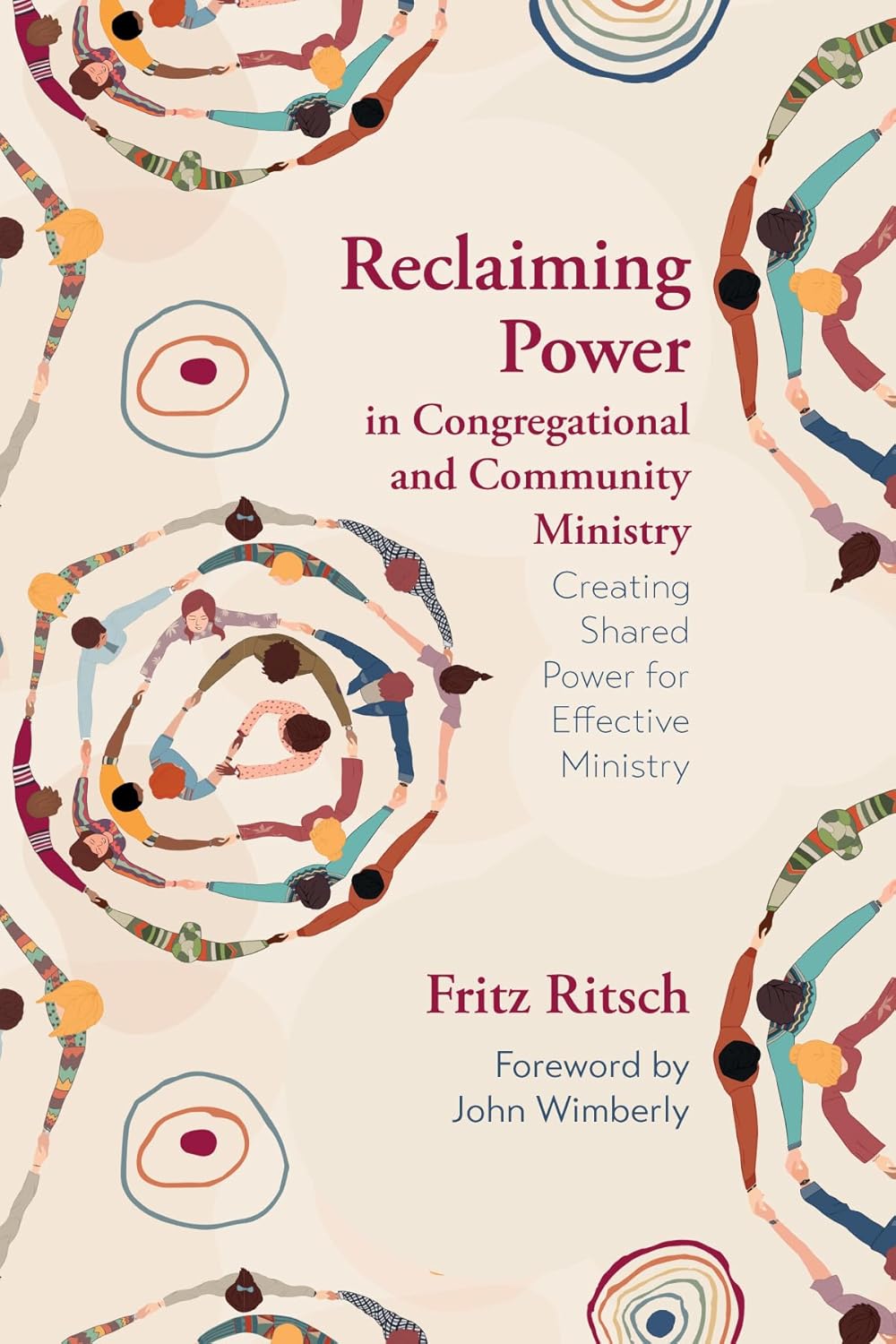
Written from mostly a mainline Christian perspective, but inclusive of other faith traditions as well, Fritz Ritsch reframes the main sources of power within religion: structural, human resources, political, and symbolic. There are elements of each reframing that I could identify as being a part of my own journey in Christian work over the years. What was most compelling was a thoughtful reality check on where the (mainly) White Christian church in the USA is mired in power struggles and defending white supremacy.
Several examples in this book are easily relatable to most in ministry, drawing from the author’s experience as a pastor and church educator. Power within congregations is a reality: it can’t be ignored or put aside when many would prefer to have “everyone just get along.” Facing and addressing these challenges with the guidance in this book will go a long way to a path of shared power and greater impact on our communities for the Love in which we say we believe.
It is clear from studies about the mainline churches in the US that COVID accelerated a decline, as predicted and confirmed by the Faith Communities Today (FCT) study. FCT noted that not just Christian churches, but all religions in America are in decline. This is compounded by the increase in what Ritsch calls “partisan churches” that push a very conservative political and social agenda. The unchecked power of these churches has also hampered interfaith cooperation in meeting the many needs of the unhoused, hungry, and elderly in our communities. Adding to this chaos and decay, research confirms once again that the people who are most likely to attend a church are older GenX and Boomers. Younger demographic groups are not! In fact, many millennials and Gen Z folks who attended religious services growing up are no longer involved. Why should they? Their passion, interests, and energy are either ignored or not utilized when older church members are well-established in their roles and expectations and are not ready to pass the torch.
None of this is really “new news”. It is striking that Ritsch and others note the acceleration of unaffiliated Christians, partially due to a dislike of the politicization of religion. Churches that abdicated their call to power brokers who took control over decisions. Churches gave up their power with matters that relate to the community at large, the tasks that unaffiliated folks believe churches SHOULD be doing.
Ritsch uses terminology from family systems, organizational leadership, spiritual direction, and reflection to walk the reader through the reframed power dynamics. This is intended to empower the congregation in the goals and work of the church. He points specifically to clergy leadership who are overtly authoritarian and mute the gifts of elders, committees, and initiatives. Most importantly, he reminds the reader that those who believe in the Trinity need to accept that the Holy Spirit will guide and equip both clergy and lay leadership.
From my engagement and leadership in different churches, from the Willow Creek and Saddleback models to the “uber-rock and “hip” churches, to more hierarchical ones, what Ritsch writes rings true. We differ slightly on his opinion of Anabaptists which is closer to my theological home than his, but it is not problematic when applying the concepts in this book. He also is clear on the destructive power of not only Christian nationalism, but white supremacy, and their influences on our culture and church leadership. As someone who comes from a white and privileged background, I could have wished for a deeper dive into how white supremacy has damaged our witness in today’s society.
In his ballad, Finding a Place, David Odowda writes:
I’m finding a place that warms my heart again
And keeping on, as I look out for you
All this talk of love is bringing me to you
I’m finding a place that warms my heart again
Album: Velvet Ears: The Fault Lines (2020)
It’s a reality that humanity wants to know their significance, be in meaningful relationships, and find a shared vision in something more than themselves. I hope that more churches will be a place where people can say “I’m finding a place that warms my heart again.” It can happen if clergy and congregations alike join in offering love, not judgment. Demonstrating shared power in our churches will do just that.
Blessed be.
Reclaiming Power in Congregational and Community Ministry: Creating Shared Power for Effective Ministry. Fritz Ritsch. (c) 2023. Wipf and Stock Publishers, Eugene OR. Paperback 128 pages. ISBN: 978-1-6667-4165-0.
Disclosure of Material Connection: I was provided this book without cost and offer my review as my own perceptions and reflections on this book. I received no reimbursement or compensation for this review.


Deb, thank you for your generous and thoughtful review! I hope you find the book helpful. FYI, my opinions about anabaptists aren’t about anabaptists as such, but about the risks of going too far in a particular direction. I was thinking particularly of the plusses and minuses of “Resident Aliens.” I have a great deal of fondness for the activism of peace churches, which obviously is a very direct, faith-based involvement in the world. Many blessings in your ministry and life. Hope you don’t mind if I post this! Blessings, Fritz
LikeLike
Since I am serving in a church currently searching for a new pastor, there was SO much in your book that I found illuminating. I copy is marked and underlined throughout. As far as the Anabaptists are concerned, being a female ordained Baptist, I am well aware of the SBC and those to the right of them. I find it fascinating, since Baptist have the “four fragile freedoms” which underpin a lot of our statements of faith (Bible freedom, Soul freedom, Church freedom, Religious freedom – best explained by Walter Shurden). We Baptists have more in common than is recognized. In any case, the church today needs to heed and respond to the changing landscape… or there will be no organized church in 50 (30?) years.
Sure, share if you find it helpful for others. I recommended it to several friends. There is much to work through.
Blessings and peace.
d
LikeLike